

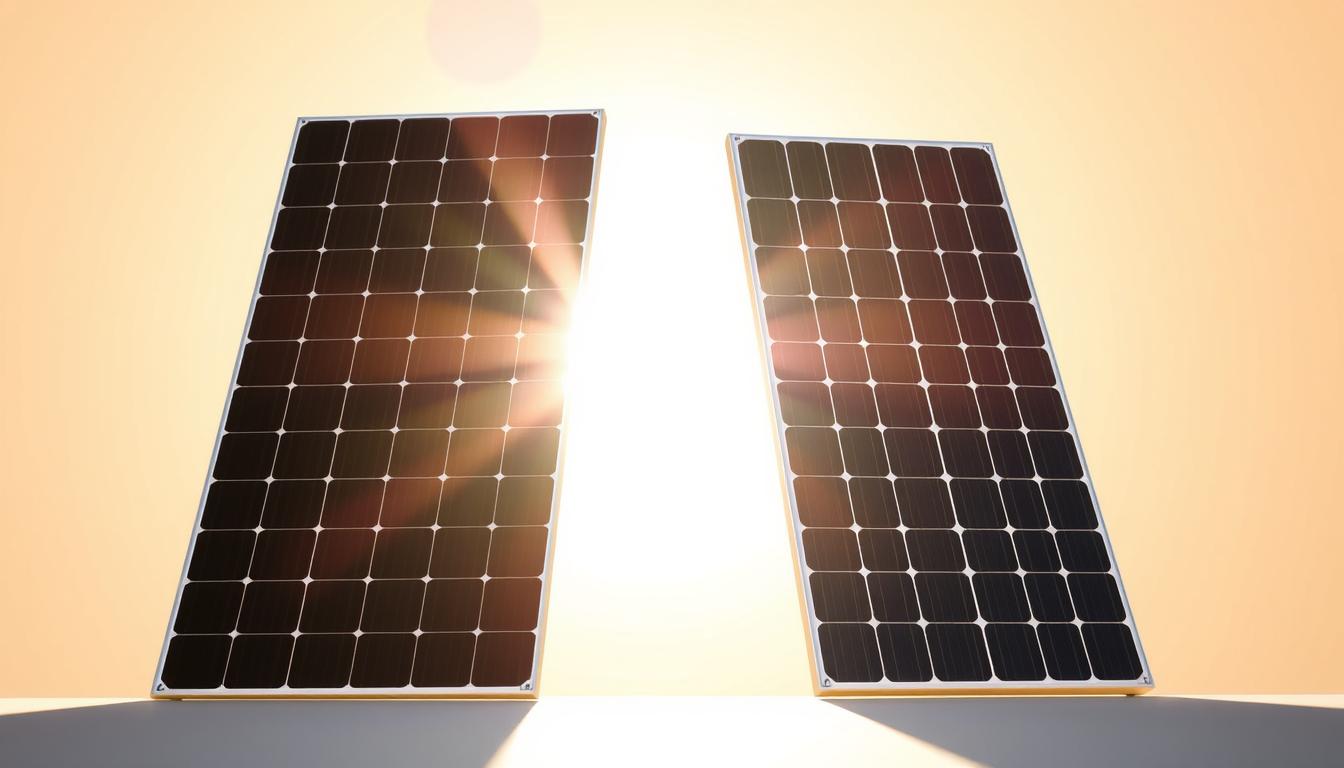
The need for clean energy is growing fast, and India is leading the way. This article compares mono PERC and bifacial solar panels two top choices in green energy. Understanding the differences between these technologies is key to making the right investment.
As a preferred Saatvik Solar distributor, Celestial Renew Experts helps customers choose the right solar panels for their home and business. This blog will guide you through all major differences and performance factors.
Key Takeaways
- Understanding the key differences between mono PERC and bifacial solar panels.
- Evaluating efficiency and performance in various conditions.
- Considering long-term savings and initial costs in solar panel choice.
- Identifying specific use cases for each type of solar panel.
- Recognizing the importance of solar energy in India for sustainable growth.
Understanding Solar Panel Technology
Solar panel technology has grown rapidly, offering more efficiency and versatility. Mono PERC and bifacial panels represent two of the most advanced options available today.
As a renewable energy partner, Celestial Renew Experts helps customers understand these technologies for better decision-making.
What Are Mono PERC Panels?
Mono PERC (Passivated Emitter and Rear Cell) panels are designed to capture more sunlight using an enhanced rear surface. Their single crystalline structure and PERC layer allow:
- Higher low-light performance
- Better conversion efficiency
- More energy production in compact spaces
This makes Mono PERC a popular choice across residential rooftops and commercial spaces.
What Are Bifacial Solar Panels?
Bifacial panels can absorb sunlight from both the front and rear sides. This dual energy-harvesting ability increases output significantly, especially in locations with:
- High ground reflectivity
- Open fields
- White rooftops
- Snowy or sandy surroundings
Bifacial panels use reflected light to outperform traditional modules, making them ideal for large-scale installations.
Efficiency Comparison of Mono PERC and Bifacial Panels
Choosing the right panel depends on how efficiently it converts sunlight into electricity.
Energy Conversion Rates
Mono PERC panels convert energy well, with rates between 20% to 23%. Bifacial panels can do even better, reaching up to 25% or more under the best conditions. This is because bifacial panels can catch sunlight from both sides. This makes them better, mainly in places with reflective surfaces.
Impact of Environmental Factors on Efficiency
Environmental conditions strongly influence performance:
- High temperatures reduce efficiency for both panel types.
- Shade affects mono PERC panels more than bifacial panels.
- Reflective surfaces significantly boost bifacial panel output.
Understanding these factors helps customers of Celestial Renew Experts choose the right solution based on their site conditions.
Mono PERC vs Bifacial Panels: Key Differences
Knowing the technical and practical differences is crucial before investing.
| Feature | Mono PERC | Bifacial |
|---|---|---|
| Design | Single-sided | Dual-sided energy capture |
| Energy Output | High | Very high in reflective environments |
| Installation | Simple | Needs specific mounting |
| Cost | Lower | Slightly higher |
| Best Use | Homes & commercial rooftops | Ground-mount, industrial & open spaces |
Cost Analysis: Mono PERC vs Bifacial Solar Panels
When it comes to solar panels, knowing the costs is key. Mono PERC and bifacial panels have different prices and benefits. This helps homeowners and businesses choose the best option for their energy needs.
Initial Investment Costs
- Mono PERC: Usually cheaper initially
- Bifacial: 10–15% higher due to advanced technology
However, Celestial Renew Experts ensures competitive pricing as an authorized Saatvik distributor.
Long-Term Savings and ROI
Despite higher upfront costs, bifacial panels often deliver:
- Higher annual units
- Faster return on investment
- Lower LCOE (Levelised Cost of Energy)
For budget-sensitive buyers, Mono PERC still provides great savings and a balanced cost-performance ratio.
Installation Considerations for Solar Panels
Important installation factors include:
- Rooftop area and direction
- Mounting structure compatibility
- Local climate and shading
- Required permits and safety standards
Bifacial panels need elevated structures and more spacing to maximize backside gain. Mono PERC panels are simpler to install, making them ideal for homes with limited space.
Use Cases for Mono PERC Panels
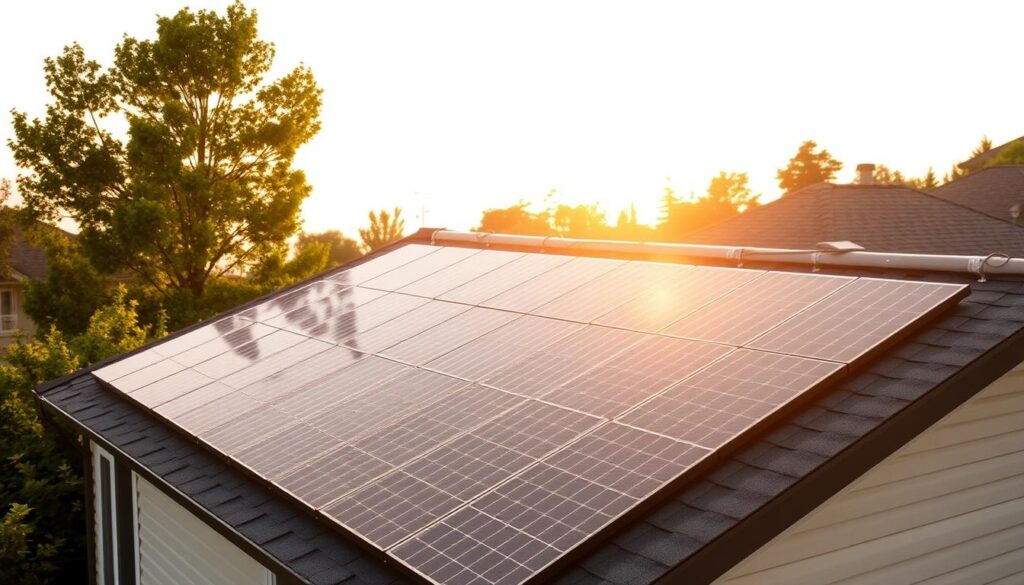
Mono PERC panels are becoming popular for their flexibility and efficiency. They work well in many settings, from homes to businesses. This makes them a great choice for different energy needs.
Residential Applications
Mono PERC panels are perfect for homes because they offer:
- Higher efficiency in limited spaces
- Attractive aesthetics
- Long-term durability
This makes them a top recommendation by Celestial Renew Experts for household solar installations.
Commercial Applications
Businesses benefit from:
- Lower operational costs
- High reliability
- Compatibility with large rooftop areas
Mono PERC panels work great for warehouses, factories, and office buildings.
Use Cases for Bifacial Solar Panels
Bifacial solar panels are becoming more popular in many areas. They can catch sunlight from both sides. This makes them useful in different settings. Let’s look at two main ways these panels are used.
Ground-Mounted Systems
Best suited for:
- Solar farms
- Industrial solar parks
- Large institutions
Reflective ground surfaces significantly boost performance.
Rooftop Installations
Ideal for:
- White-coated roofs
- RCC rooftops with reflectivity
- Elevated mounting structures
They offer higher output in the same footprint.
| Use Case | Benefits | Considerations |
|---|---|---|
| Ground-Mounted Systems |
|
|
| Rooftop Installations |
|
|
Comparison Table: Mono PERC vs Bifacial Panels
| Feature | Mono PERC Panels | Bifacial Panels |
|---|---|---|
| Efficiency | Up to 22% | Up to 25% |
| Cost | Lower | Higher |
| Installation | Simple | Technical |
| Best For | Homes, commercial rooftops | Ground mounts, solar farms |
Performance in Different Climates
Solar panels work differently in various climates. Knowing these differences helps us choose the right solar technology. Factors like temperature, humidity, and environment greatly affect how well solar panels perform.
This section looks at how hot humid and cold weather impact mono PERC and bifacial solar panels.
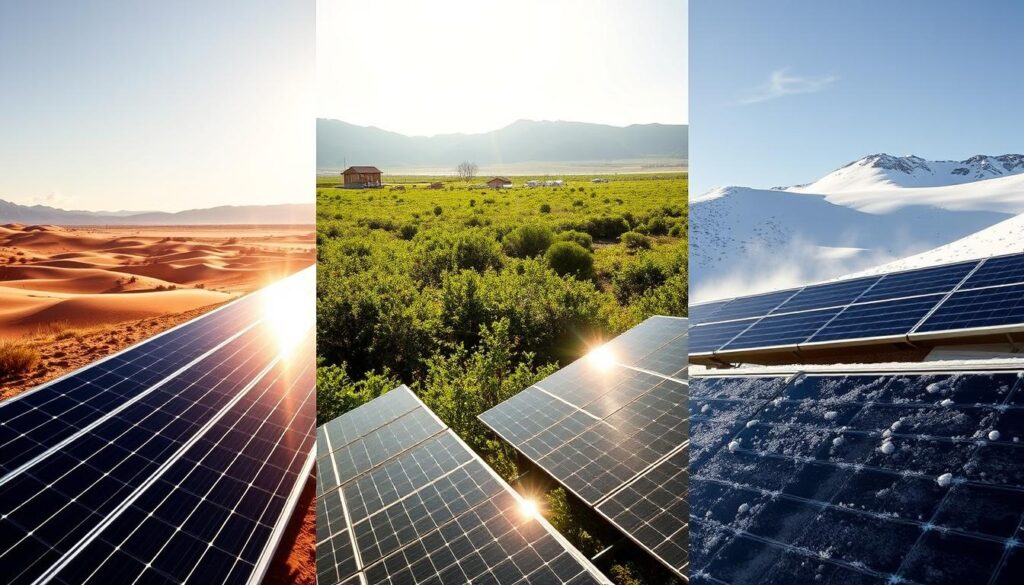
Hot and Humid Conditions
In hot humid climates, solar panels face unique challenges. Mono PERC panels might degrade faster due to high temperatures. This can lower their efficiency and lifespan.
Bifacial solar panels, though, perform better. They can use light reflected from nearby surfaces. This boosts their energy output, even in tough weather.
Cold Weather Performance
Cold weather brings its own set of challenges and benefits for solar panels. Both mono PERC and bifacial panels can handle cold well. Mono PERC panels stay efficient in cooler temperatures, less affected by heat loss.
Bifacial panels can also get a boost from snow. Snow can reflect more sunlight, increasing their energy production.
In summary, hot humid weather might be better for bifacial panels. But cold climates offer advantages for both types, in different ways. It’s key to consider local weather to get the most from solar panels.
PERC vs TopCon Technology in Solar Panels
When it comes to solar panels, knowing the difference between PERC and TopCon technology is key. PERC, or Passivated Emitter and Rear Cell technology, boosts solar panel efficiency. It does this by making the rear side of the cell more efficient, reducing losses and improving light capture. This leads to more power output than older solar cells.
TopCon technology, or Tunnel Oxide Passivated Contacts, goes even further. It uses a thin layer of tunnel oxide to better connect the silicon cell with metal contacts. This step reduces energy loss, making solar panels even more efficient at turning sunlight into electricity.
Both PERC and TopCon technologies are important in the solar panel world. They help meet the growing need for more efficient and powerful solar energy. As technology advances, it’s vital for people to stay updated on these developments. This knowledge helps in making smart choices when investing in solar energy.
Choosing the Right Solar Panel for Your Needs
Before choosing a panel, evaluate:
- Your energy consumption
- Available rooftop space
- Budget
- Climate conditions
- Installation structure
Expert Recommendation
Customers can consult Celestial Renew Experts, a trusted Saatvik distributor, for a personalized site assessment and panel recommendation.
Factors to Consider
- Energy Consumption Patterns: Look at how much energy your home or business uses. If you use a lot, you might need more efficient panels or more units.
- Roof Space Availability: Check how big your roof is and how it faces. This affects how many panels you can put up and where they should go for the best sunlight.
- Budget Considerations: Think about how much you can spend on installation and upkeep. While cheaper panels might seem better, think about the long-term savings and how much you’ll get back.
- Environmental Conditions: Look at the weather in your area. Some panels work better in certain weather, which can affect how well they work and how long they last.
Personalized Recommendations
Getting advice from local experts is key for personalized solar solutions. They can check out your place and energy needs. This way, you can pick the best panels for you, whether it’s Mono PERC or Bifacial. A plan made just for you will make your solar system work its best.
| Factor | Importance | Recommended Action |
|---|---|---|
| Energy Consumption | High | Review past energy bills |
| Roof Space | Medium | Measure available area |
| Budget | High | Establish financial limits |
| Climate | Medium | Research climate impact on panel types |
Conclusion
This article has shown the main differences between mono PERC and bifacial solar panels. Knowing these differences is key to choosing the right energy solution. It’s important to think about your energy needs before deciding.
Choosing between mono PERC and bifacial panels depends on your location, preferences, and budget. This guide helps you make a smart choice based on your situation. Think about how these panels will work in your area and their cost-effectiveness.
Choosing the right solar technology is a big step towards living sustainably and being energy-independent. Consider these thoughts on solar energy as you decide which panel fits your goals. This will help you use the sun’s power for a better future.
0 Comments