

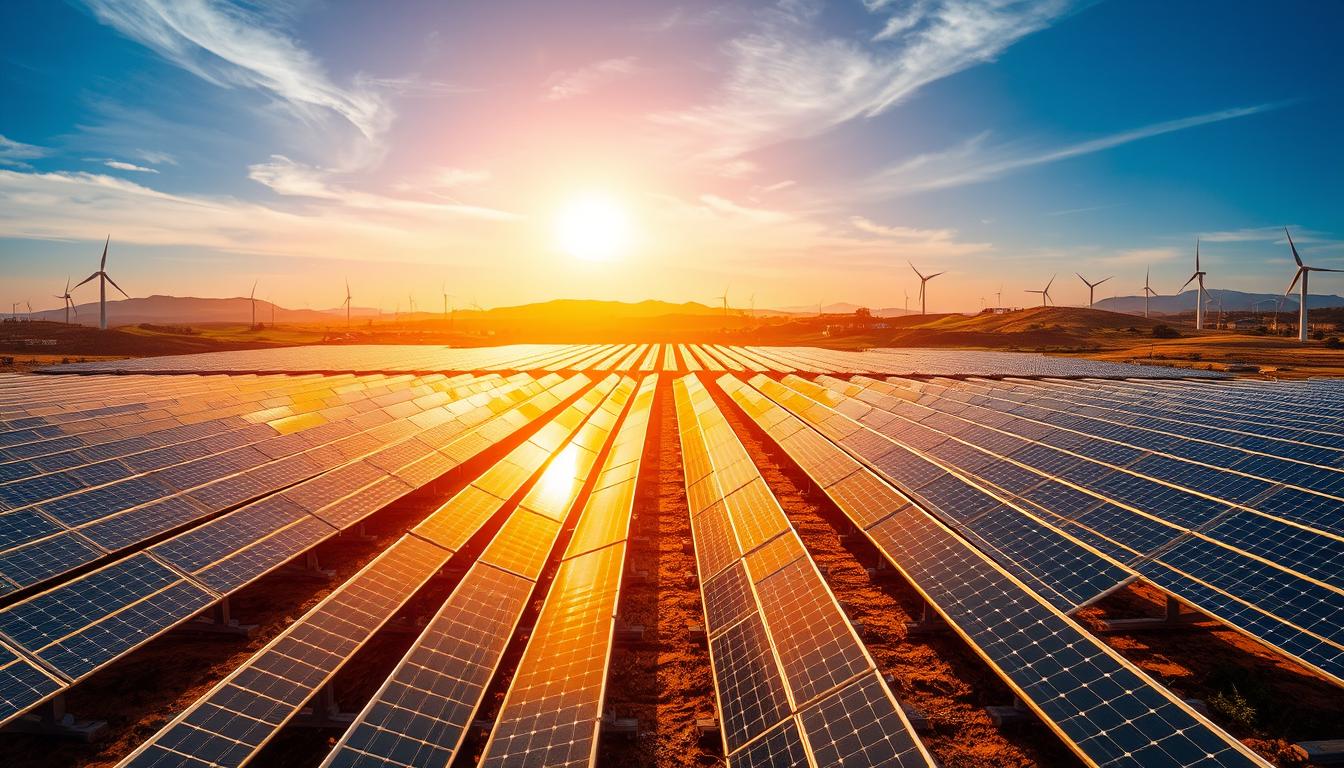
Did you know India gets over 5,000 trillion kWh of solar radiation every year? This huge amount shows the big chance for solar energy in India. The country is moving fast to become a top solar power maker. With the government’s help, more people wanting solar, and new tech, the future looks bright.
By 2030, India wants to grow its solar energy a lot. This will make it a big player in green energy.
Key Takeaways
- India receives over 5,000 trillion kWh of solar radiation annually, indicating massive solar energy.
- The country is set to become one of the top leaders in solar power production worldwide.
- Government initiatives and policies play a key role in speeding up solar energy growth in India.
- Technological advancements are making solar energy more accessible and efficient for consumers and businesses alike.
- Ambitious renewable energy targets have been set for 2030, promising significant developments in solar capacity.
The Growing Demand for Solar Energy in India
India’s solar energy demand is growing fast. This is because the population is increasing quickly and there’s a big energy shortage. Right now, there’s a 12% gap between energy demand and supply.
This gap is a big chance to use more renewable energy like solar. The government wants to reach 500 GW of renewable energy by 2030. Solar power is key to meeting this goal.
As cities grow and industries need more power, finding good solar power resources becomes more urgent. Solar energy is a promising solution to this problem.
Switching to solar energy helps meet today’s energy needs and offers many benefits. It lowers electricity costs and helps the environment. As more people learn about solar, the interest in it is growing. This is an exciting time for solar energy in India.
Government Initiatives & Policies Supporting Solar Growth
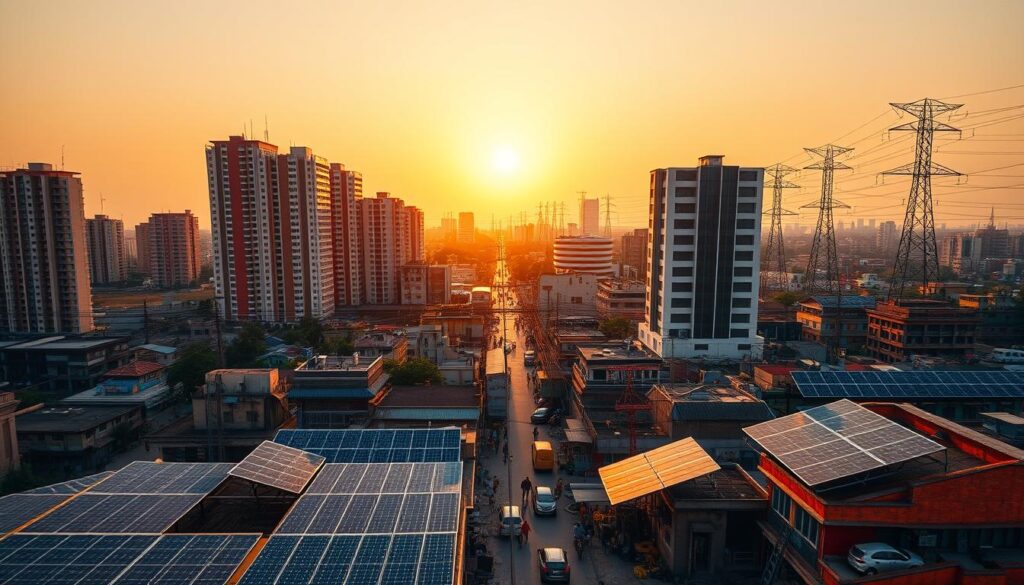
The Indian government is key in boosting solar energy. It has set big goals for solar power, aiming for 500 GW of renewable energy by 2030. The Jawaharlal Nehru National Solar Mission is a big push for solar energy production and installation.
Programs like the Production-Linked Incentive scheme encourage manufacturers to invest in solar. This helps make solar technology more available.
The government wants to make more solar products in India. It aims to cut down on imports and grow local supply chains. The Pradhan Mantri Suryodaya Yojana is about making homes use solar power. It’s all about creating a green energy future together.
Looking ahead to 2025, these efforts show India is moving towards clean energy. Policymakers are working on rules that help solar energy grow. They also want to keep the economy strong and protect the environment.
By teaming up with private companies and encouraging new ideas, these policies will change the energy world. They promise a bright future for solar energy in India.
| Initiative | Description | Impact |
|---|---|---|
| Jawaharlal Nehru National Solar Mission | Aims for 500 GW of solar capacity by 2030. | Boosts renewable energy production. |
| Production-Linked Incentive Scheme | Encourages domestic manufacturing of solar technologies. | Reduces import dependency. |
| Pradhan Mantri Suryodaya Yojana | Promotes solarization of households. | Increases community participation in sustainability. |
Technological Advancements in Solar Energy Production
The solar energy scene in India has seen big changes thanks to new tech. These advancements have made solar panels cheaper, helping more people use them. This is true for many different areas.
Bifacial solar panels are a big step forward. They catch sunlight from both sides, making more energy. This means solar setups work better and cost less for users.
Perovskite solar cells are also exciting. They’re light, flexible, and might turn sunlight into electricity more efficiently than old silicon panels. This could make solar power even more affordable in India.
These new solar techs make clean energy more available and cut down on fossil fuel use. India is supporting local makers to improve these technologies. This effort is helping build a strong solar industry. It’s a step towards a greener, more sustainable future.
Solar Energy in India: Current Capacity and Future Projections
India is a big player in the global solar energy scene. It has a current solar capacity India of over 81 GW. This shows the country’s strong commitment to using renewable energy and being sustainable.
Thanks to government plans and private efforts, solar energy projects in India are growing fast. This is making the country’s energy future look brighter.
Looking ahead, India aims to reach 100 GW by 2025. This goal shows the country’s plan to improve solar energy systems. The government is launching solar projects and encouraging businesses and communities to use renewable energy.
Several things are making India’s solar outlook look good. Solar panels are getting better, and more people are setting up their own solar systems. These changes help increase capacity and support local energy production.
As technology improves, the solar sector is expected to grow even more. This will make solar energy cheaper and more appealing to investors and users.
Upcoming Solar Projects and Developments
India is making big moves in solar energy with many new projects. States like Gujarat, Rajasthan, and Andhra Pradesh are leading the way. They aim to build large solar parks to boost the country’s solar power.
These efforts are also about making energy more accessible. The government wants to bring solar power to more cities. This will help areas that have struggled to get reliable energy.
These projects are special because they involve the community. They want people to understand and support solar energy. The goal is to make India less dependent on fossil fuels.
| State | Project Name | Capacity (MW) | Expected Completion |
|---|---|---|---|
| Gujarat | Gujarat Solar Park | 1,000 | 2024 |
| Rajasthan | Bhadla Solar Park | 2,245 | 2023 |
| Andhra Pradesh | Kadapa Solar Park | 1,000 | 2025 |
Challenges Facing the Solar Industry in India
The solar industry in India has great promise but faces many hurdles. One big problem is finding land for solar projects. Getting the right land can take a long time, with many legal issues to solve.
Places with lots of sunlight often have other uses for their land. This makes it hard to find land for solar projects.
Another big issue is keeping the grid stable with more solar power. Adding too much solar power can cause energy supply problems. The current grid might not be ready for this change without big improvements.
Money is also a big challenge. Many companies find it hard to get the funds needed for big projects. Not enough people know about the benefits of solar energy. This makes it harder for businesses and homes to switch to solar.
To solve these problems, everyone needs to work together. This includes the government, private companies, and local communities. We need to find ways to make land acquisition easier and improve the grid. This will help India use more solar energy.
Benefits of Solar Energy for Consumers and Businesses
Solar energy brings big benefits to both homes and businesses. As more people choose green living, the solar power benefits shine through. One key advantage is the chance for solar energy cost savings. Homeowners can cut their electricity bills by using sunlight to power their homes.
Going solar means gaining energy freedom. This freedom shields you from rising utility costs. Local businesses are finding out the financial benefits of solar panels and the good returns on their investment in consumer adoption solar energy.
Switching to solar also helps the planet. It cuts down on harmful emissions, making our world cleaner for the next generations. As more people learn about solar power benefits, communities are seeing the value in clean energy.
For some, solar energy also boosts their home’s value. Homes with solar panels sell for more because they attract eco-friendly buyers. Solar power’s benefits go beyond saving money, leading to a greener future for everyone.
Solar Energy Companies Driving Change in India
Solar energy companies in India are changing the way we get power. Celestial and Jakson Group lead the way with big projects and new tech. They don’t just make energy; they also set it up and keep it running.
These companies work together to make a strong team. They share knowledge and improve their skills. This teamwork helps India meet its energy goals.
| Company Name | Specialization | Contributions to Solar Innovation |
|---|---|---|
| Celestial | Manufacturing Solar Panels | Development of efficient solar photovoltaic modules |
| Jakson Group | Installation and Maintenance | Deployment of large-scale solar power plants |
| Tata Power Solar | Integrated Solar Solutions | Leading in R&D for solar technology advancements |
| Adani Green Energy | Renewable Energy | Major investments in solar farms across India |
Job Creation and Employment Opportunities in Solar Energy
The solar energy sector in India is growing fast, creating many job opportunities. As India aims to boost its renewable energy, jobs will pop up in areas like making, installing, and fixing solar tech. This will lead to a big need for skilled workers, helping the solar industry job growth.
Renewable energy fits well with India’s goal to create more jobs. Companies are moving towards green practices, making the solar sector a great place to work. To meet these new demands, training and skill development are key.
This change not only uses India’s solar resources but also lowers unemployment. It brings jobs to local areas, improving lives and supporting communities. The solar industry’s role in the economy shows the power of renewable energy in building a sustainable future.
Environmental Impact and Sustainability of Solar Power
Solar energy brings big benefits for the environment. It helps India cut down on carbon emissions, which is good for our planet. Using fossil fuels pollutes the air and water, harming our health.
Switching to solar power makes the air cleaner for everyone. It’s a step towards a healthier future. India’s move towards solar energy is a big step towards a greener planet.
Using solar power every day cuts down on harmful pollutants. These pollutants hurt our health and the environment. Investing in solar energy helps the planet in the long run.
Choosing solar power shows India’s commitment to a sustainable future. It’s a way to meet energy needs without harming the environment.
Conclusion
The future of solar energy in India is looking bright. This is thanks to strong policies, new technologies, and more people understanding its value. Solar power will be key in meeting India’s energy needs and helping the environment.
Investments are flowing in, and many are working towards renewable energy. This includes big solar farms and homes with solar panels. The variety of projects shows a strong and growing market. This growth will improve energy security and create jobs.
As India keeps innovating with solar energy, it will support the country’s economic goals. It will also lead to a cleaner, greener future. Solar energy is a key part of making India’s energy system sustainable and strong.
0 Comments