

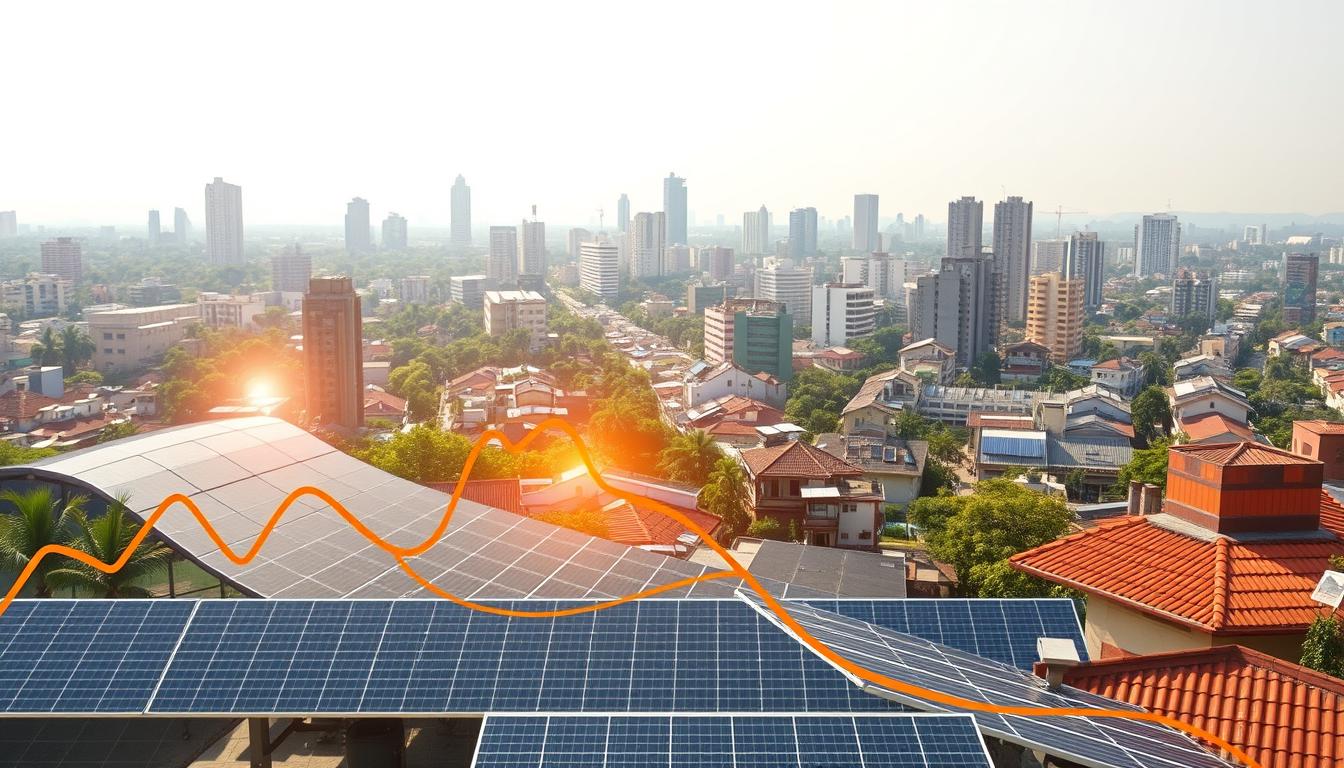
Did you know India’s solar power grew from 161 MW in 2010 to 64.38 GW by February 2023? This huge jump shows India is moving fast towards its goal of 450 GW by 2030. In Pune, the cost of solar panels is dropping, making solar energy more affordable. As we approach 2025, knowing these trends is key for those wanting to switch to green energy.
This article explores the solar panel pricing trends in Pune. It helps us see how solar energy is shaping up in India’s future.
Key Takeaways
- India aims for 450 GW solar capacity by 2030.
- Pune shows a significant increase in solar panel installations.
- Expect continuing declines in solar panel prices through 2025.
- Solar energy solutions are becoming increasingly accessible in urban areas.
- Understanding pricing trends helps in informed investment decisions.
Introduction to Solar Energy in India
India is changing its energy scene, with solar energy at the forefront. Being one of the sunniest places, it has a huge solar energy capacity. This is estimated at 5,000 trillion kWh every year.
This vast resource is key to India’s goal of growing renewable energy. The interest in solar energy is growing. This is due to environmental concerns and the need for energy independence.
Switching to solar power helps fight climate change and reduces fossil fuel use. The government is making it easier to use solar technology. This includes the Grid Connected Rooftop Solar project.
India also has big plans for solar energy. It aims to have 500 GW of non-fossil fuel electricity by 2030. This shows how important solar energy is for a green and secure future.
As solar energy grows in India, the whole sector is ready for new ideas, money, and benefits for everyone.
Current Solar Panel Market Overview in Pune
The Pune solar market is growing fast. More people and businesses are choosing renewable energy. This shift is driven by a desire for sustainability and the financial perks of solar power.
Prices for solar panels in Pune have dropped. Now, the cost per watt is around Rs. 70-80. This makes solar power more affordable for everyone, from homes to businesses.
More people in cities want sustainable energy. Government help and subsidies are making solar power even more appealing. Pune is leading the way in adopting green energy.
Factors Influencing Solar Panel Pricing in Pune
Knowing the factors affecting solar prices Pune is key to smart solar energy choices. Several elements shape the costs of solar installations. These include the solar panel types, government subsidies, installation complexity, and market trends.
The price gap between monocrystalline and polycrystalline panels affects solar installation costs. Monocrystalline panels are pricier but more efficient and space-saving. Polycrystalline panels are cheaper but less efficient.
The rising demand for solar energy in Pune has sparked competition among installers. This competition has led to lower prices, making solar tech more accessible. Also, financing options and government schemes help keep prices down while ensuring quality.
| Factor | Impact on Pricing |
|---|---|
| Type of Solar Panels | Monocrystalline generally pricier than polycrystalline |
| Government Subsidies | Reduces initial installation costs |
| Installation Complexity | Higher complexity increases labor and materials costs |
| Market Demand | Higher demand drives prices down due to competition |
Types of Solar Panels Available in Pune
In Pune, you can find many solar energy options. Knowing the main types helps you choose wisely. Monocrystalline and polycrystalline panels are two key types, each with its own strengths.
Monocrystalline Panels
Monocrystalline panels are known for their high efficiency and sleek look. They are made from a single crystal, which means they turn more sunlight into electricity. They’re great for small spaces because they work well even in less sunlight.
Even though they cost more, they last longer and save you money in the long run.
Polycrystalline Panels
Polycrystalline panels are made from many silicon crystals. They’re not as efficient as monocrystalline panels but are cheaper. This makes them a good choice for saving money.
They work well in sunny places and are used in homes and businesses in Pune. As more people want solar panels, polycrystalline panels are becoming more common because they’re affordable.
| Feature | Monocrystalline Panels | Polycrystalline Panels |
|---|---|---|
| Efficiency | High (15-22%) | Moderate (13-16%) |
| Cost | Higher | Lower |
| Space Efficiency | Excellent | Good |
| Longevity | 25+ years | 20-25 years |
Government Schemes and Incentives for Solar Energy
The Indian government is working hard to make solar energy more affordable. They have special programs for both homes and businesses. This helps meet the growing need for energy while supporting green solutions.
The PM Surya Ghar Muft Bijli Yojana is a big help. It covers up to 10 kW of solar system costs. This makes it easier for homeowners to switch to solar power. Thanks to these incentives, solar energy becomes a more viable option.
There are also other financial aids like Central Financial Assistance (CFA) and state subsidies. These help make solar technology more appealing. They also help the country move towards cleaner energy. Knowing about these can help you save money on energy costs.
These strong incentives show the Indian government’s dedication to solar power. They are making the country’s energy cleaner and more efficient.
Solar Panel Pricing Trends in India
The solar pricing trends India show big changes due to tech advancements and a competitive market. Now, customers have many choices, leading to lower solar energy costs across the country. This helps both homeowners and businesses looking into solar energy.
The 2025 solar market analysis gives us deep insights into pricing changes. Costs can vary a lot, based on the solar panel system’s capacity. This helps buyers understand their budget and plan their solar energy investments.
New and innovative solar technologies are coming out, making solar installations cheaper. The solar energy market wants to make energy more affordable. This push is for cleaner, sustainable energy options all over India.
Solar Panel In Pune: Pricing Expectations for 2025
As we look towards 2025, the solar panel market in Pune is set for big changes. More homeowners are seeing the benefits of solar energy. This is making them think differently about prices.
The costs will depend on several things. These include the technology used and the brand chosen.
Average Costs per Watt
In 2025, the average cost per watt of solar panels is expected to be between Rs. 56 and Rs. 65. This shows a market that’s getting more competitive. It’s driven by new ideas and more people using solar energy.
Things like how hard it is to install and who you buy from can also affect prices.
Cost Breakdown by Panel Type
Looking at the costs, monocrystalline panels are usually pricier. This is because they’re more efficient and last longer. On the other hand, polycrystalline panels are cheaper. They’re a good choice for those watching their budget.
By understanding these differences, buyers can make the most of their money.
Impact of Solar Subsidy Schemes on Pricing
Solar subsidies are key in India’s solar energy growth. Government programs help lower costs by covering a big part of expenses. In different areas, subsidies can be from 20% to 70% off, making solar energy more affordable for homes.
These subsidies have a big effect on prices in India. They make solar panels cheaper, encouraging more people to buy them. Thanks to subsidies, more families can afford solar technology, boosting the market.
The National Rooftop Solar Portal also helps. It makes it easier for people to get government solar benefits. This platform simplifies the application process and offers useful resources. As people learn more about solar benefits, they want to switch to solar more often.
Financing Options for Solar Panel Installation
Getting the right financing is key for homeowners in Pune to install solar panels. There are many solar loan schemes that make it easier to go green. These include government loans with good interest rates and terms.
Zero-cost EMI plans are also popular. They let you pay for solar panels over time without extra interest. This makes it easier to handle the initial costs. Plus, private financing offers more flexibility in your budget.
Many homeowners can get loans that are close to or even less than their current electricity bills. This makes switching to solar energy both easy and affordable. Companies like Freyr Energy offer custom financing options in Pune. They help many residents start using solar technology.
Residential vs. Commercial Solar Panel Pricing
The cost of solar panels varies a lot between homes and businesses. Homes usually need smaller systems, which are more affordable. Businesses, on the other hand, require bigger systems to meet their energy needs. This means they pay more upfront.
In Pune, businesses often spend more on solar installations. This is because they need larger systems to power their facilities. Even though it costs more at first, bigger installations can be cheaper per watt in the long run.
Knowing the differences in solar pricing helps both homeowners and businesses make better choices. Homeowners can plan for their energy needs. Businesses can see the long-term savings of bigger installations. Making informed decisions helps both groups get the most out of their solar investments.
Future of Solar Technology and Prices
The future of solar technology in India is looking bright. New innovations will make solar energy more efficient and cheaper. This is thanks to research on new materials and better storage solutions.
Experts predict that solar prices will keep falling. This is because of the tech advancements and government support for green energy. Soon, solar power will be more affordable for everyone.
India is working hard to use cleaner energy sources. The latest technologies will improve solar energy’s performance and keep costs low. This is great news for the solar market in India.
Local and International Market Comparisons
Looking at the local vs global solar markets gives us important insights. Local markets face unique challenges like money issues and the need for better infrastructure. On the other hand, global markets enjoy tech advancements and better installation methods.
The solar pricing comparisons between these markets show big differences. In developed countries, solar panel costs have dropped a lot thanks to government help and competition. In India, solar adoption is growing fast, but cost remains a big hurdle.
Today’s solar adoption trends show that local demand is increasing. Yet, people are hesitant because of financial worries and lack of support. Countries leading in solar have strong policies that India could learn from. By adopting these strategies, local markets can benefit like their global peers.
Conclusion
The solar panel prices in Pune for 2025 are getting better. This is thanks to government support and new solar tech. It’s making solar energy more affordable for homes and businesses.
More people are seeing the good things about solar power. This means more demand. It’s leading to a brighter future for all.
Getting solar panels saves money and helps the planet. Prices are good, and there are ways to pay for them. It’s a smart choice for many.
Now is the time to think about solar energy. It’s good for the planet and can make life better for everyone. Pune can be a leader in using clean energy.
0 Comments