


India aims to hit 500 GW of renewable energy by 2030. Sungrow utility solar solutions play a big role in this goal. They focus on solar energy and offer cutting-edge tech to meet India’s energy needs.
Sungrow is all about sustainability and efficiency. They help India reach its 2030 renewable targets. With their advanced solutions, Sungrow supports India’s dream of a greener future.
Key Takeaways
- Sungrow is integral in meeting India’s renewable energy goals.
- The target of 500 GW of renewable capacity by 2030 emphasizes solar energy’s role.
- Sungrow’s innovative technology supports sustainability and efficiency.
- Aligning with national objectives, Sungrow contributes to a greener future.
- Utility-scale solar solutions are essential for achieving the 2030 targets.
Introduction to India’s Renewable Energy Goals
India has made strong commitments to expand renewable energy and reduce dependence on fossil fuels. Increasing the share of clean energy in the national power mix is a critical step toward tackling climate change and improving environmental sustainability.
The country aims to reduce carbon emissions intensity by 33–35% by 2030, and solar energy is expected to play a central role in achieving this target.
Government initiatives such as the National Solar Mission encourage both public and private investments in solar power. These policies help accelerate the adoption of renewable energy technologies across India.
Support from solar technology providers and energy solution companies — including firms working with global manufacturers like Sungrow — is helping scale solar deployment and improve energy reliability.
Solar energy not only contributes to environmental sustainability but also strengthens energy security and economic growth across the country.
The Importance of 2030 Renewable Targets
Reaching the 2030 renewable energy targets is key for India’s sustainable future. These goals do more than help the environment. They also boost the country’s economy. Let’s see how these targets can make a big difference.
Environmental Benefits
Meeting these targets will greatly reduce air pollution. This will improve public health. By using more solar energy, we’ll also cut down on greenhouse gases.
This change helps keep our climate stable. It also means we’ll use less fossil fuels. This is good for our planet’s biodiversity and ecosystems.
Economic Impact
The renewable energy sector in India is set to grow a lot. It will create many new jobs and encourage new ideas in green tech. This growth is making India’s economy stronger.
Using more renewable energy makes India less dependent on foreign oil. This reduces the impact of price changes in the global oil market. It helps create a strong and forward-looking economy.
Sungrow Utility Solar Solutions
Sungrow is a global leader in solar inverter technology and utility-scale solar solutions. Its systems are designed to deliver high efficiency, reliability, and performance across large solar projects.
These solutions are helping developers build scalable solar power plants that support India’s expanding renewable energy infrastructure.
Innovative Technology
Sungrow’s solar inverters and energy storage systems are top-notch. They maximize performance and efficiency. This means more solar energy can be used.
These systems meet international standards and fit India’s needs perfectly. They ensure utility solar systems perform well. The advanced inverters also help manage energy and keep the grid stable, supporting India’s green energy goals.
Scalability and Efficiency
Sungrow’s solutions are designed to grow with projects. They work for small rooftops and big solar farms. This flexibility makes them easy to add to existing grids.
The systems help manage energy well, fitting India’s varied power needs. They also help the renewable sector grow.
| Feature | Sungrow Systems | Traditional Systems |
|---|---|---|
| Energy Conversion Efficiency | Up to 99% | 85-95% |
| Modularity | Highly modular | Limited options |
| Grid Connection | Seamless integration | Challenging integration |
| Compliance Standards | Global and local standards | Varies by manufacturer |
Role of Sungrow in India’s Renewable Roadmap
Sungrow plays an important role in supporting India’s renewable roadmap through partnerships with developers, EPC companies, and energy providers.
By enabling high-performance solar installations, Sungrow technologies contribute to national sustainability initiatives and renewable energy programs.
Organizations involved in solar project development — including companies like Celestial Renew Experts — help connect these advanced technologies with real-world solar installations, ensuring reliable implementation and technical support.
Through continued innovation and collaboration, Sungrow contributes significantly to India’s long-term renewable energy expansion.
India’s Utility-Scale Solar Growth
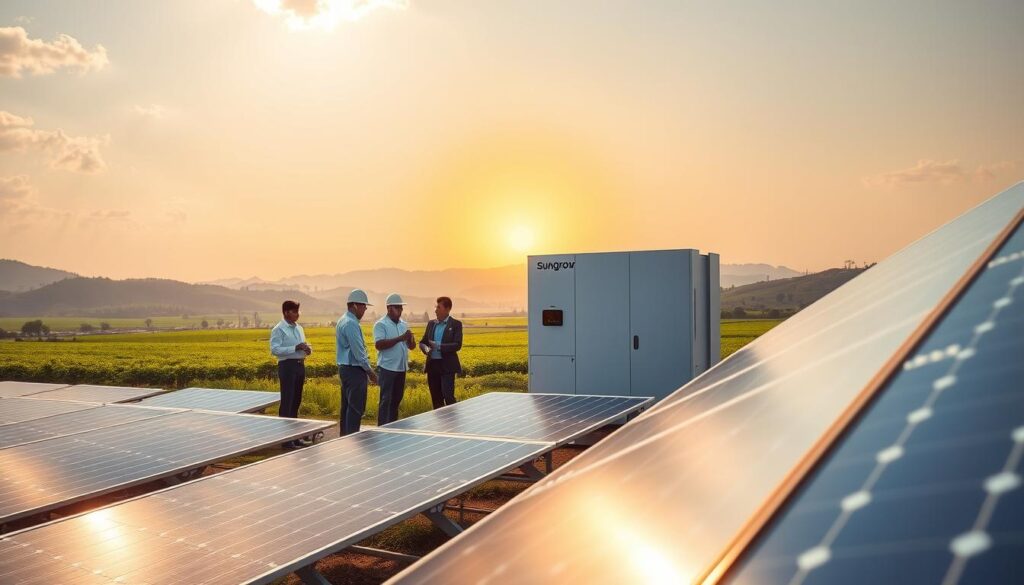
India is making big strides in renewable energy, becoming a key player in solar growth. The market has grown fast, thanks to lower costs and more demand for green energy. This growth offers big chances for investment in the sector.
Current Landscape and Future Future Potential
India’s solar market is on the rise. In recent years, it has quickly added capacity to meet its renewable energy goals. Experts believe this trend will keep going, thanks to better policies and new tech.
The future for solar growth in India looks bright. Investments in new infrastructure are helping to meet the growing energy needs.
Challenges and Opportunities
Despite the positive outlook, India faces some big hurdles. Getting land for projects is hard, which makes things more expensive and slows things down. Finding money for projects can also cause delays.
But, these problems also bring chances for new ideas and investments. For example, working on energy storage and smart grid tech could make the energy system better and more reliable.
| Challenges | Opportunities |
|---|---|
| Land acquisition complications | Investment in energy storage solutions |
| Financing hurdles | Smart grid technology development |
| Infrastructure limitations | Innovative financing models |
Case Studies of Successful Sungrow Projects in India
This section looks at notable projects that show Sungrow’s key role in India’s renewable energy. Through case studies, we see how new solutions help meet big energy goals across the country.
Project Overview
Many large solar farms in India use Sungrow technology. These projects aim to boost energy production and sustainability. They are in places like Rajasthan, Gujarat, and Maharashtra.
Each project has its own goals. These include cutting down carbon emissions, making more energy available, and creating jobs locally.
Performance Metrics and Outcomes
Real data from these projects shows great results. For example, many have made more energy than expected. Their efficiency rates are often over 95%, showing Sungrow’s systems work well.
The table below shows important metrics from some projects:
| Project Name | Location | Energy Produced (MWh) | Efficiency Rate (%) | Grid Contribution (%) |
|---|---|---|---|---|
| Rajasthan Solar Farm | Rajasthan | 1,200,000 | 96 | 20 |
| Gujarat Solar Initiative | Gujarat | 850,000 | 95 | 15 |
| Maharashtra Green Energy | Maharashtra | 900,000 | 97 | 18 |
Collaboration with Local EPCs
Working together, Sungrow and local EPC firms are key to renewable energy success in India. They use local knowledge and resources to make projects more efficient. This teamwork speeds up projects and meets local rules, making sustainable energy solutions work better together.
Benefits of Local Partnerships
Local EPCs bring many benefits. They offer solutions that fit the area’s needs. Their knowledge of the community helps projects finish faster and better.
These partnerships also improve project results. Local EPCs know the area’s conditions and rules well. This helps projects run smoothly and meet local standards.
Case Examples of Collaboration
Many projects show the power of Sungrow and EPC teamwork. One project cut down on time and kept community support high. Local help made the project more accepted and successful.
These examples show how teamwork achieves project goals. It’s clear that working together makes a big difference.
Technological Advancements in Solar Solutions
Recent tech breakthroughs have made solar energy in India more efficient and reliable. Sungrow is at the forefront with its cutting-edge solar tech. It aims to improve energy management and work well with current grid systems. These changes bring better performance and more sustainable energy use.
Smart Energy Management
Sungrow’s smart energy systems use advanced tech to manage energy well. They adjust energy use based on real-time needs. This smart approach boosts energy efficiency and cuts down on waste.
With these systems, businesses and homes can save on energy costs. This makes solar energy even more attractive in the market.
Integration with Grid Infrastructure
Being able to connect solar energy with the grid is key for stable energy supply. Sungrow’s tech makes this integration smooth. It ensures power flows well between solar and traditional grids.
This connection meets growing energy needs and makes the energy network stronger. It’s a big step towards a sustainable energy future in India.
Investment Trends in Renewable Energy
The renewable energy sector in India is changing fast. This is thanks to more investments and new ways to fund projects. These changes are key to reaching national goals, like growing solar energy. It’s important for those interested in renewable energy to know about these funding chances and government support.
Funding Opportunities and Initiatives
New funding sources are helping solar projects in India grow. Money from abroad and partnerships between government and private companies are big players. These partnerships help share resources and make sure money goes where it’s needed.
Small projects also get help through micro-financing. This lets even the smallest players join in renewable energy investments.
Government Policies Supporting Solar Growth
Indian government policies are a big help for solar energy. Programs like the Solar Parks Scheme and subsidies are key. They make it easier for businesses and investors to get involved.
These policies aim to lower costs and make rules clearer. This creates a good environment for renewable energy to grow.
| Funding Source | Description | Impact on Solar Projects |
|---|---|---|
| International Investments | Funds from overseas investors aimed at accelerating solar infrastructure | Increased capital availability, enabling large-scale projects |
| Public-Private Partnerships | Collaborations between government and private entities for project development | Shared risks and resources, leading to innovative solar solutions |
| Micro-Financing | Small loans for local entrepreneurs in renewable energy | Empowers community-based projects and boosts local economies |
| Government Subsidies | Financial support provided by the government for solar technologies | Lowers overall project costs, encouraging broader participation |
Conclusion
India’s path to renewable energy is constantly evolving, with Sungrow at the forefront. Their solar solutions boost energy efficiency and support sustainable growth. Sungrow’s role in India’s 2030 renewable goals is clear, bringing advanced tech and local partnerships.
For a bright renewable energy future, teamwork is key. Sungrow works with local EPC firms to build a strong, green ecosystem. This work aims for a sustainable India, balancing growth with care for the environment.
Looking forward, we must keep investing in renewable energy. By innovating, practicing sustainability, and working together, India can achieve its energy targets. This will make India a global leader in renewable energy.
0 Comments